

You may already be aware of this, but if not, please pay attention. San Diego is implementing new wildfire safety rules that require a mandatory five-foot “Zone Zero” buffer around many homes. Within this area, most combustible materials are prohibited. These rules apply to properties in Very High Fire Hazard Severity Zones and affect suburban and urban neighborhoods such as North Park, South Park, University Heights, and nearby areas. New construction must comply starting February 2026, while most existing owner-occupied homes generally have until February 2027. This can be challenging for many due to the cost of making this happen.
What Are San Diego’s Zone Zero Wildfire Rules?
- A required five-foot ember-resistant buffer around structures
- Most combustible materials are prohibited within that zone
- Applies to mapped high fire hazard areas across the city
- New construction compliance begins February 2026
- Most existing homes comply by February 2027
Expanded Explanation
What the New Rules Do
Zone Zero refers to the first five feet surrounding a home or other structure. Fire officials consider this area one of the most critical ignition points during wind-driven wildfires. As a result, most combustible materials are prohibited within this zone.
Common examples include wood fences that touch the house, trellises, sheds, small trees, shrubs, flowers, wood mulch, grass, and synthetic turf.
Where the Rules Apply Across San Diego
The rules apply to properties mapped within Very High Fire Hazard Severity Zones. These zones are not limited to canyon-edge suburbs. They now include a wide range of communities across San Diego. Homeowners can confirm whether their property falls within a Very High Fire Hazard Severity Zone by reviewing the City of San Diego’s official fire hazard severity zone map.
Suburban and canyon-adjacent neighborhoods include Scripps Ranch and Carmel Valley.
Dense urban and metro neighborhoods also affected include North Park, University Heights, South Park, and nearby areas, particularly where homes are near canyons or open space, or where most homes are older, dating to the early 1900s.
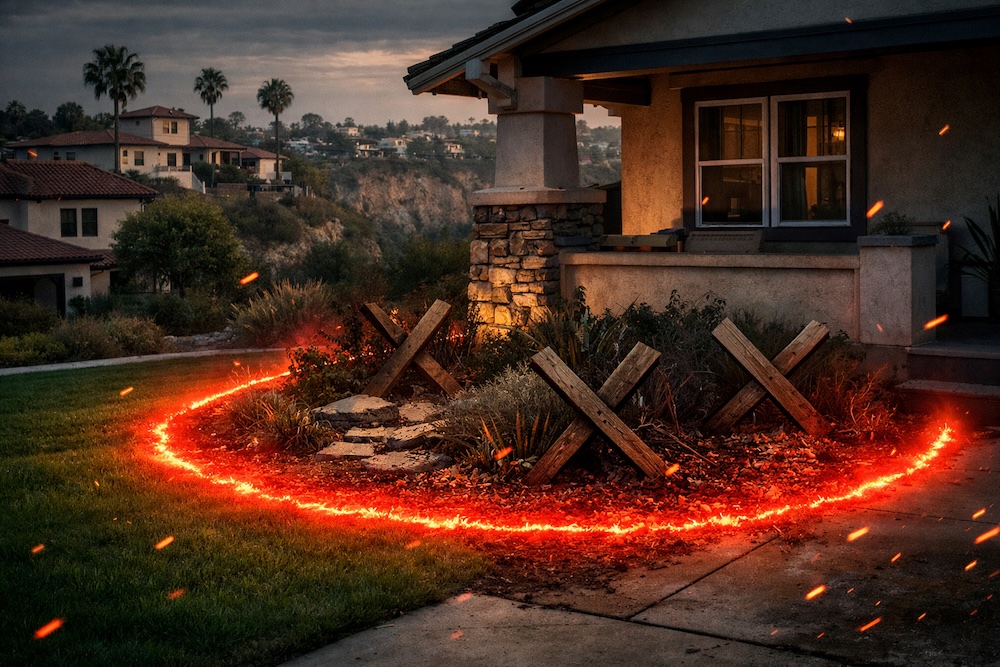
North Park & Metro Communities: Why This Matters More Than You Think
Neighborhoods like North Park, South Park, and University Heights are often assumed to have low wildfire risk due to their urban density. However, many blocks are near the canyon or open space, or have older landscaping and construction features that increase ember vulnerability.
For homeowners in these metro communities, Zone Zero is less about wildfire evacuation and more about compliance, insurance eligibility, and future resale friction. We currently have several buyers who want to buy in these communities, but they are primarily searching the SD City Fire Hazard Zone map because they know insurance will be much higher in these areas.
- Urban homes often have fences, planters, and hardscape touching the structure.
- Lots are smaller, making the five-foot buffer more impactful.
- Insurance scrutiny tends to be higher in mixed-risk zones.
When the Rules Take Effect
- New construction: Must comply starting February 2026.
- Existing owner-occupied homes: Generally have until February 2027. We’ll see how this goes as we get closer to this timeframe.
- Some properties (including rentals): May be required to comply sooner once local fire codes are fully implemented.

Why the City Is Doing This
The rules align with California state law requiring enhanced ember-resistant defensible space standards. Fire officials emphasize that homes are frequently ignited by wind-blown embers rather than direct flames, even when the main fire is far away.
Events like the Cedar Fire and Witch Fire showed that urban and suburban neighborhoods can experience large-scale home loss when embers find combustible materials close to structures.
Common Misconceptions and Insights
- “This only affects rural homes.” Urban neighborhoods are clearly included.
- “I can wait until enforcement starts.” Insurance may drive earlier compliance.
- “Zone Zero means removing everything.” The focus is on combustible material, not all landscaping.
Important Considerations for Homeowners
- Homeowners: Walk the five-foot perimeter now and identify likely changes.
- Sellers: Proactive Zone Zero compliance can reduce buyer objections, insurance delays, and last-minute negotiation issues when selling a home in North Park.
- Buyers: Factor Zone Zero into renovation budgets. Depending on where you are buying, you may be able to negotiate this in your offer.
Does Zone Zero apply to all homes in San Diego?
No. It applies to properties located within mapped Very High Fire Hazard Severity Zones.

Does this include urban neighborhoods like North Park or Hillcrest?
Yes. Parts of many urban neighborhoods are included based on updated fire hazard mapping.When do existing homes need to comply?
Most owner-occupied homes generally have until February 2027.
Will this affect homeowners’ insurance?
It may. Insurers are expected to consider Zone Zero compliance when evaluating wildfire risk. Home insurance has become a real challenge these days.
Next Steps
If you own property in North Park or other metro San Diego neighborhoods, understanding Zone Zero early can help you avoid insurance issues and last-minute compliance problems.
If you’re unsure how these rules may affect your home’s value, you can start with a free home valuation for San Diego homeowners to understand your current position.
Frequently Asked Questions: San Diego’s Zone Zero Rules
Does Zone Zero apply to every home in San Diego? No. These rules specifically apply to properties located within the city’s mapped Very High Fire Hazard Severity Zones. While this includes canyon-edge suburbs, it also covers many homes in urban metro areas like North Park and University Heights.
What exactly needs to be removed from the five-foot buffer? The goal is to remove “combustible” materials. This typically includes wood fences touching the house, bark mulch, trellises, sheds, and certain shrubs or trees. Non-combustible items like gravel, stone, or concrete are perfectly fine.
When do I actually have to comply with these rules? For new construction, compliance begins in February 2026. If you own an existing owner-occupied home, you generally have until February 2027 to meet the requirements.
Will this impact my ability to get homeowners’ insurance? It likely will. Many insurers are already using fire hazard maps to determine eligibility and rates. Being proactive with Zone Zero compliance can help reduce friction with insurance providers and make your home more attractive to future buyers.
How does this affect the sale of my home in North Park or South Park? In our local metro market, savvy buyers are already checking fire maps. If your home is in a high-hazard zone, having Zone Zero already completed can prevent last-minute negotiation hurdles, insurance delays, or buyer objections during the escrow process.