
If San Diego keeps falling behind on housing production, what does that mean for your home’s value in North Park, University Heights, or South Park?

San Diego’s annual housing shortfall of roughly 4,700 units protects existing home values in North Park, University Heights, and South Park by keeping supply far below demand, making now a strategic window for sellers.
Why San Diego’s Housing Shortfall Matters for North Park Sellers Right Now
Here’s a number that should catch your attention: San Diego needs approximately 13,500 new housing units every year. In 2024, the city permitted only 8,782. That gap of nearly 4,700 units isn’t a one-time blip. It’s a pattern that has compounded over decades, creating a cumulative shortfall estimated between 25,200 and 90,000 units depending on who’s counting.
So what does a citywide construction deficit have to do with your Craftsman bungalow on Dwight Street or your Spanish Revival duplex near 30th and University? Everything.
I’ve lived in North Park since 2001 and have led McT Real Estate Group since 2004. Over 530 transactions later, what I can tell you is this: the neighborhoods where new supply simply cannot be built at scale are the neighborhoods where home values hold the strongest. North Park, University Heights, and South Park are three of those neighborhoods. And if you’re thinking about selling, understanding this dynamic is the single most important piece of context you can have.
How the Housing Production Gap Drives North Park Home Values Higher
San Diego added 119,200 new households over the past decade, but built only 63,500 homes. That structural shortage of 55,700 units doesn’t distribute evenly across the city. It concentrates hardest in established, walkable, centrally located neighborhoods where buildable land simply doesn’t exist.
Walk the residential blocks between Ray Street and Myrtle Avenue in North Park. You’ll see why. These streets are filled with character-rich Craftsman homes, Spanish Colonial Revivals, and mid-century stucco residences on modest lots. There’s no vacant acreage waiting for a developer. Geographic constraints, canyon edges, and the existing density of the 92104 zip code mean that meaningful new supply isn’t coming.
What does that translate to in real numbers? North Park’s median home price reached approximately $1.0M in early 2026, up 12.2% from the prior year. The median price per square foot reached $800. Meanwhile, average home values across the neighborhood sit around $970,177, reflecting a steady 3.6% year-over-year climb.
For context, the city currently ranks number 272 for affordability among the 300 largest U.S. cities. And one housing economist has warned that San Diego risks becoming like Santa Barbara, where the median sale price is $1.875M, and population is actually declining because residents keep getting priced out. That’s what happens when housing production chronically fails to keep pace with demand in desirable coastal locations.
But here’s what I tell my clients who are considering selling: that scarcity is precisely what protects your investment. Your home isn’t just competing against other listings. It’s competing against a construction pipeline that can’t deliver enough alternatives.

Why University Heights and South Park Sellers Benefit Even More
If North Park is the anchor, University Heights and South Park are the quiet beneficiaries of the same supply crunch. University Heights home values have reached approximately $877,076, with a steady 3.0% annual appreciation rate. South Park’s detached home median across its shared 92102 zip code hit $806,000, up 7.5% year over year.
Both neighborhoods sit east of Balboa Park, tucked between Hillcrest, North Park, and Downtown. Location-wise, they’re genuinely hard to beat. But they’ve managed to avoid becoming overbuilt.
One couple I worked with in South Park had been sitting on their 1920s bungalow near Grape Street for over a decade. They worried that rising interest rates would scare off buyers. Instead, their home attracted four offers in the first week because there were simply no comparable properties within a mile. The housing shortage did their marketing for them.
University Heights tells a similar story. Residents there enjoy walkable dining along Park Boulevard, weekend outings at Old Trolley Barn Park, and proximity to everything without paying luxury-tier prices. When listings do appear, they’re absorbed quickly because the pool of buyers who want this lifestyle far exceeds the homes available.
The Rate Lock-In Effect and What It Means for Your Selling Strategy
You might be wondering: if the market favors sellers so heavily, why isn’t everyone listing? The answer is the rate lock-in effect.
Approximately 79% of California homeowners with a mortgage hold a rate at or below 5%. Sixty-three percent are at or below 4%. Trading a 3.5% mortgage for today’s rates near 6.36% is a genuinely difficult financial decision, and I never minimize that with clients.
But here’s the shift I’ve watched unfold. In 2025, there were 3,886 more for-sale signs across the San Diego market than in 2024, and nearly 10,000 more than in 2023. Homeowners are getting tired of waiting for rates to drop. And inventory, while growing, remains well below pre-pandemic norms. San Diego County started 2025 with 3,252 active listings, the highest January since 2020, but still far below the 2017 to 2019 average of more than 5,200.
In North Park specifically, the market remains very competitive with a score of 78 out of 100. Over 44% of homes sold above asking price in recent months. Hot homes can go pending in as few as 6 days.
What I tell sellers who are wrestling with the lock-in dilemma: run the math on your equity, not just your rate. A homeowner who bought in North Park in 2019 at $700K is likely sitting on $300K or more in appreciation. That equity can fund a significant down payment on a next home, potentially offsetting the rate difference entirely.
One North Park seller I guided through this exact calculation realized that by putting 40% down on their next home in University Heights, their monthly payment actually decreased compared to staying put. The numbers surprised them. They surprise most people.
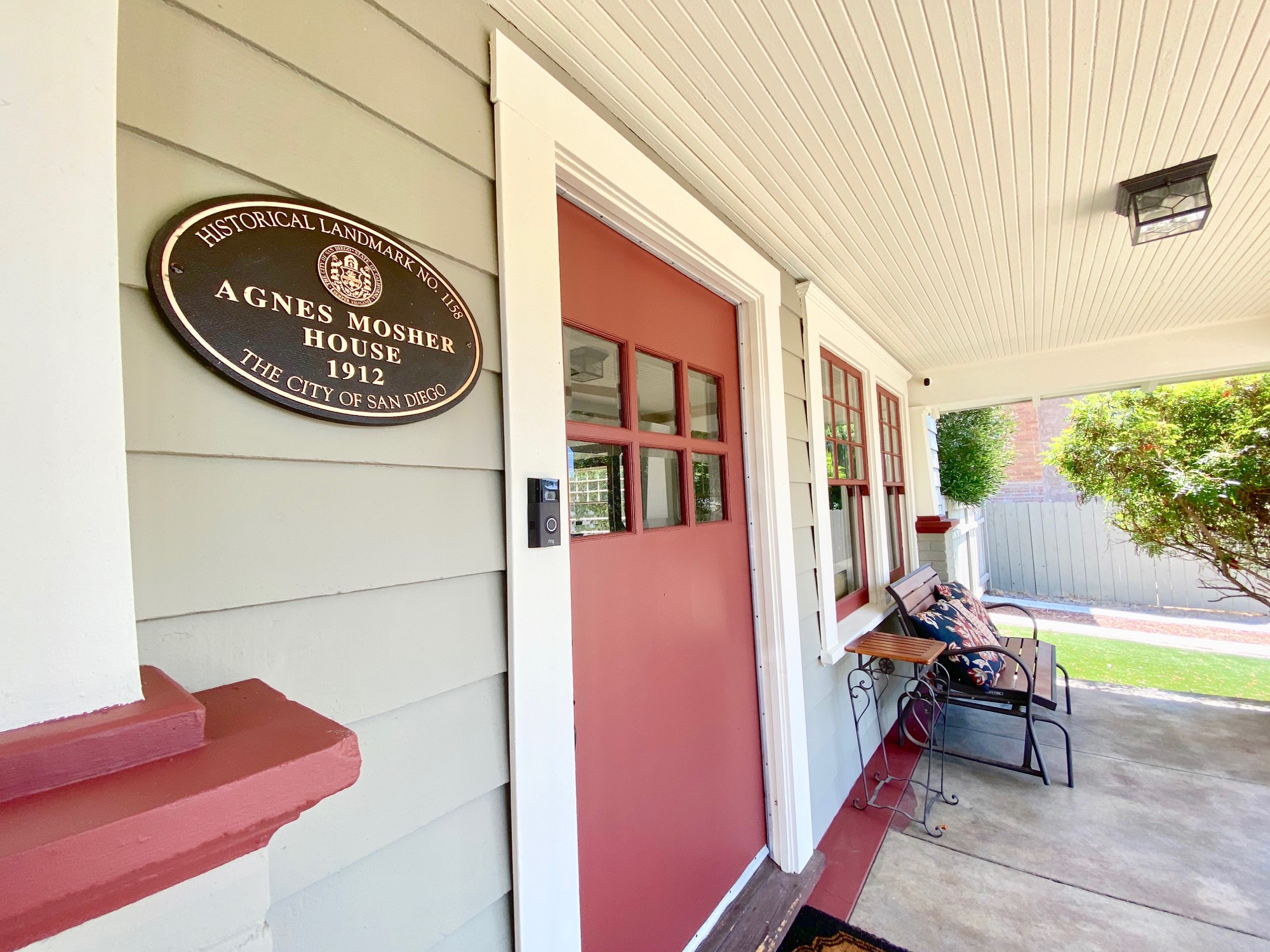
What Sellers of North Park Historic Homes Need to Know About This Market
The architectural stock in North Park, University Heights, and South Park is one of the strongest preserved collections of Craftsman and Spanish Revival homes in the West. That’s part of the magic. But it also creates specific selling considerations.
Many older parcels have clay or cast-iron sewer lines prone to root intrusion or breaks. A sewer scope typically costs a few hundred dollars and can prevent expensive surprises during buyer inspections. I always recommend getting this done before listing, not after.
For pre-listing improvements with the highest ROI in these neighborhoods:
- Kitchen modernization on original Craftsman kitchens. A $30K to $50K remodel can add $80K to $100K in value
- ADU or garage conversions. With 71% of North Park households being renter-occupied, adding a legal accessory dwelling unit to your lot is one of the strongest value-adds in the 92104 zip code
- Drought-tolerant landscaping and curb appeal. In a neighborhood with a Walk Score of around 86, first impressions from the sidewalk drive offer prices significantly
The development battles happening nearby underscore why your existing home carries so much value. A proposed eight-story, 186-unit development called “The Lawson” in nearby Golden Hill drew organized opposition in 2025, with a court issuing a restraining order to halt construction. Projects like these face enormous headwinds, which means the new supply that might otherwise compete with your listing keeps getting delayed or blocked entirely.
How to Time Your Sale in North Park, University Heights, or South Park
With 22 years of selling in these neighborhoods and 530+ closings under my belt, here’s what I’ve learned about timing. North Park follows San Diego’s broader pattern with a spring surge from March through May, when buyer competition peaks and inventory briefly ticks up. But the housing production shortfall has flattened seasonal swings in recent years. When there simply aren’t enough homes to go around, every season becomes selling season for well-priced, well-presented listings.
The current conforming loan limit for San Diego County is $1,104,000, the highest ever set by the FHFA. That means most North Park single-family homes now fall within the reach of conventional financing, expanding your buyer pool considerably.
Demand has remained suppressed since 2022, while seller activity has slowly increased. This has created more competition among sellers, more negotiation leverage for buyers, and a market where pricing strategy matters more than it has in years. The “A” homes, move-in ready, well located, correctly priced, still draw multiple offers. Overpriced or dated homes sit on the market longer and give buyers room to negotiate.
Frequently Asked Questions
Is San Diego’s housing shortage getting better or worse?
It’s getting worse in cumulative terms. While the city permitted nearly 8,800 new homes in 2024, more than double the annual average of past decades, that still falls roughly 4,700 units short of the estimated 13,500 units needed per year. The gap compounds annually, which is why existing homes in established neighborhoods continue appreciating.
How does the housing shortfall affect North Park home values specifically?
North Park’s median home price reached approximately $1.0M in early 2026, up 12.2% year over year. With virtually no vacant land for new construction in the 92104 zip code and only 29% of households being owner-occupied, every single-family listing represents a rare opportunity for buyers. That scarcity directly supports higher prices.
Should I sell my North Park home now or wait for rates to drop?
Waiting carries risk. Inventory is slowly increasing each year as more homeowners release themselves from the rate lock-in effect. Selling while inventory remains historically thin gives you stronger positioning. Run the equity math with an experienced local agent rather than fixating solely on rate differentials.
What are North Park’s historic homes worth in today’s market?
Single-family Craftsman bungalows and Spanish Revival homes in North Park frequently sell between $900K and $1.3M, with renovated properties pushing past $1.4M. The median price per square foot is approximately $800, reflecting the premium buyers place on the neighborhood’s preserved architectural character.
How long do homes take to sell in University Heights?
University Heights follows patterns similar to North Park, with well-priced homes averaging around 33 days on market. Properties that hit the market at the right price point and are move-in ready can go pending in under a week. The neighborhood’s steady 3.0% annual appreciation and proximity to Balboa Park sustain consistent buyer interest.
What improvements should I make before selling my South Park home?
Focus on kitchen modernization, sewer line scoping (many pre-war homes have aging clay pipes), and exterior curb appeal. Drought-tolerant landscaping performs especially well in South Park’s walkable setting near Fern Street and 30th Street, where buyers often walk past before ever scheduling a showing.
Is North Park still a seller’s market in 2026?
Yes. North Park scores 78 out of 100 on competitiveness measures. Over 44% of recent sales closed above the asking price, and the neighborhood continues to be classified as a seller’s market. However, pricing strategy has become more important as inventory slowly increases from historic lows.
How does San Diego’s affordability crisis impact my ability to sell?
Buyers need approximately $221,900 in household income to afford a typical San Diego home. While that limits the buyer pool, it also means serious buyers who do qualify are highly motivated and financially capable. In central neighborhoods like North Park, these qualified buyers consistently outnumber available listings.
Should I consider adding an ADU before selling in North Park?
An ADU can be one of the highest-ROI improvements in the 92104 zip code. With 71% of North Park households renting and average rents at $2,885 per month (up nearly 5% year over year), a permitted ADU adds both immediate rental income potential and significant resale value for investment-minded buyers.
What makes North Park, University Heights, and South Park different from other San Diego neighborhoods for sellers?
These three neighborhoods combine walkability, architectural character, central location near Balboa Park, and extreme supply constraints. New construction is virtually impossible at scale due to geographic limitations and community opposition to large developments. That combination creates a pricing floor that more suburban neighborhoods simply don’t have.
The Bottom Line for Sellers in North Park, University Heights, and South Park
San Diego’s housing production shortfall isn’t an abstract policy problem for you. It’s the structural force protecting your home’s value. Every year the city falls 4,700 units short of demand, your existing home in North Park, University Heights, or South Park becomes a little more scarce and a little more valuable.
The question isn’t whether to sell. It’s whether you’re positioned to maximize what this market will give you. Pricing strategy, pre-listing preparation, and understanding the buyer pool in your specific micro-neighborhood are what separate a good outcome from a great one.
With 303 client reviews, a 4.9 out of 5 star rating, and more than two decades of selling exclusively in these neighborhoods, McT Real Estate Group knows these blocks intimately. If you’re weighing your options, Z. McT-Contreras is available at 619-736-7003 to walk you through what your home is worth in today’s supply-constrained market.