
If you live in the North Park Community and are a homeowner, you’ve probably seen it, or you’re about to. A new trash fee tied to Measure B is showing up on many 2025–2026 property tax bills, and most homeowners aren’t thrilled about it. San Diego taxes are already high, so it’s completely normal to feel frustrated seeing another charge added to the mix.
The good news (even if the situation isn’t ideal): you can often control one part of your bill by choosing a trash bin size that fits your household. Let’s make this simple, clear, and realistic for North Park living.
How do I choose between a 35, 65, or 95-gallon trash bin to lower my new 2025 property tax fee?
This is the exact question many North Park and metro San Diego homeowners are asking right now. The short answer is: smaller trash bin = lower annual fee, as long as the size still works for your weekly trash volume.
Before we get into “which size should I pick,” let’s cover what really matters: the costs and what changes (and what doesn’t).
Why is this trash fee showing up on my property tax bill?
Measure B changed how San Diego funds trash service for many residential properties. Starting with the 2025–2026 tax year, eligible homeowners are being charged a trash service fee that appears on the property tax bill. Whether you agree with it or not, the fee is now part of the cost of owning a home in the City of San Diego.
To see the City’s official fee breakdown and calculator, use this page:
City of San Diego Trash Service Fee Calculator.
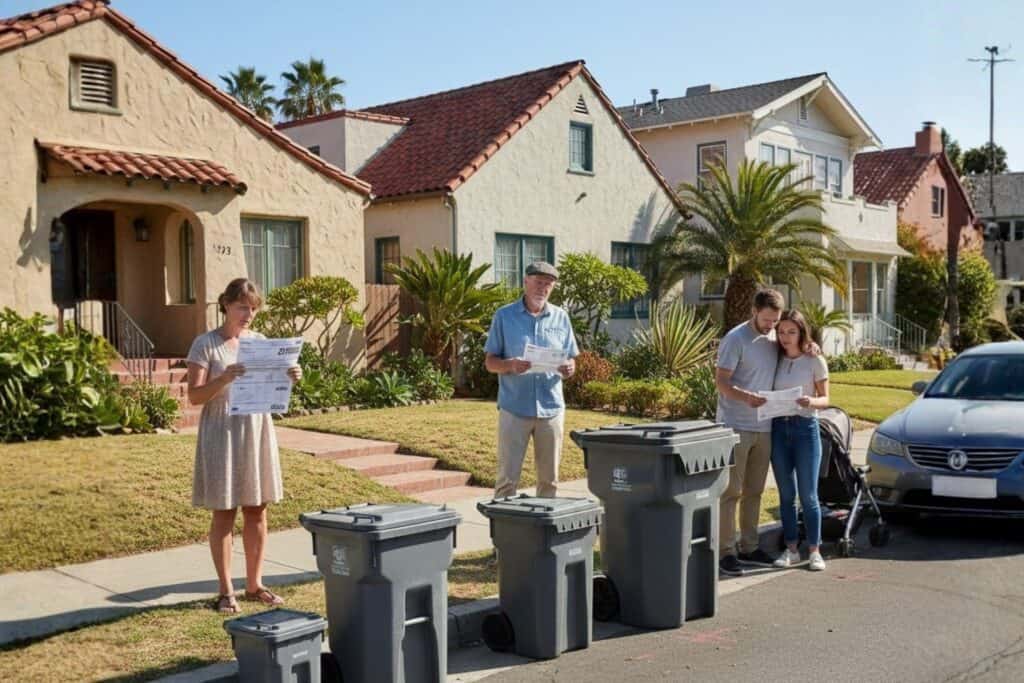
What are the actual costs for the 35, 65, and 95-gallon trash bins?
These amounts are based on the City’s published monthly rates (effective starting July 1, 2025). Your trash bin size is what changes the price.
35-gallon trash bundle: $32.82 per month (about $394 per year)
65-gallon trash bundle: $38.94 per month (about $467 per year)
95-gallon trash bundle: $43.60 per month (about $523 per year)
That’s roughly a $129 per year difference between the smallest and largest bin. In North Park, where costs stack up fast, saving $100+ per year on a recurring fee is worth thinking about. Also, it does get a little tricky if you own a duplex or 2-4 units. We own a duplex, and when I called the city to let them know they had removed 2 of my trash bins and replaced them with only one, that was a whole other situation. The gentleman said the city is providing only one trash bin per APN lot number, and I would need to request another.
What does not change, no matter which trash bin size I choose?
This part is easy to miss, so let’s make it crystal clear:
No matter which trash bin size you pick, you typically still receive:
• A 95-gallon recycling bin
• A 95-gallon organics (green) bin
• The same pickup schedule
The main lever you control is the trash container size (35 vs 65 vs 95). That’s what changes what you pay.
How to pick the right bin size (without overpaying)
Instead of getting stuck on gallon numbers, think about your weekly routine. Ask yourself one honest question:
Is my trash bin usually completely full the night before pickup?
If you want the quickest answer, here’s the simplest guide:
- Choose the 35-gallon bin if your trash is rarely full and you recycle/compost consistently (often great for 1–2 people).
- Choose the 65-gallon bin if you want a comfortable middle that handles real life without paying the highest fee (common for 2–4 people).
- Choose the 95-gallon bin if you consistently overflow, or you have a bigger household, and you know you generate a lot of trash every single week.
Now let’s walk through each choice with North Park reality in mind.

The 35-gallon trash bin in North Park: lowest cost, but less wiggle room
This option is usually the cheapest. It can work well if you’re in a smaller household and are already good at using the recycling and green bins.
In North Park, the 35-gallon bin often makes sense for:
• One or two adults
• Homes that cook at home and use organics
• People who break down boxes and recycle regularly
• Households that don’t produce tons of packaging waste
The downside is simple: you have less room for “surprise trash weeks.” A big delivery, a party, a garage cleanout, or just missing one week of recycling can make the small bin feel tight fast. If you hate dealing with overflow, you may prefer the 65.
The 65-gallon trash bin: the “most people won’t regret it” choice
If you’re torn between saving money and keeping life easy, the 65-gallon is often the best balance. You’re paying less than the 95-gallon option, but you’re not sweating it every week.
This size often fits:
• Two to four people
• Busy households that recycle “most of the time.”
• Families with kids
• Anyone who wants fewer overflow headaches
Across metro San Diego, including North Park, South Park, University Heights, Golden Hill, Normal Heights, and Kensington, this tends to be the “safe” choice for many homeowners.
The 95-gallon trash bin: most space, highest cost
If your trash is always packed tight and you’re constantly dealing with overflow, the 95-gallon bin can be the least stressful option. For bigger households or people who consistently generate a lot of trash, it may be worth paying more.
But here’s the honest warning: if you don’t actually fill it, you’re paying the top price every year for extra capacity you’re not using. In many North Park homes, especially smaller households, the 95-gallon bin is more than enough once recycling and organics are used correctly.
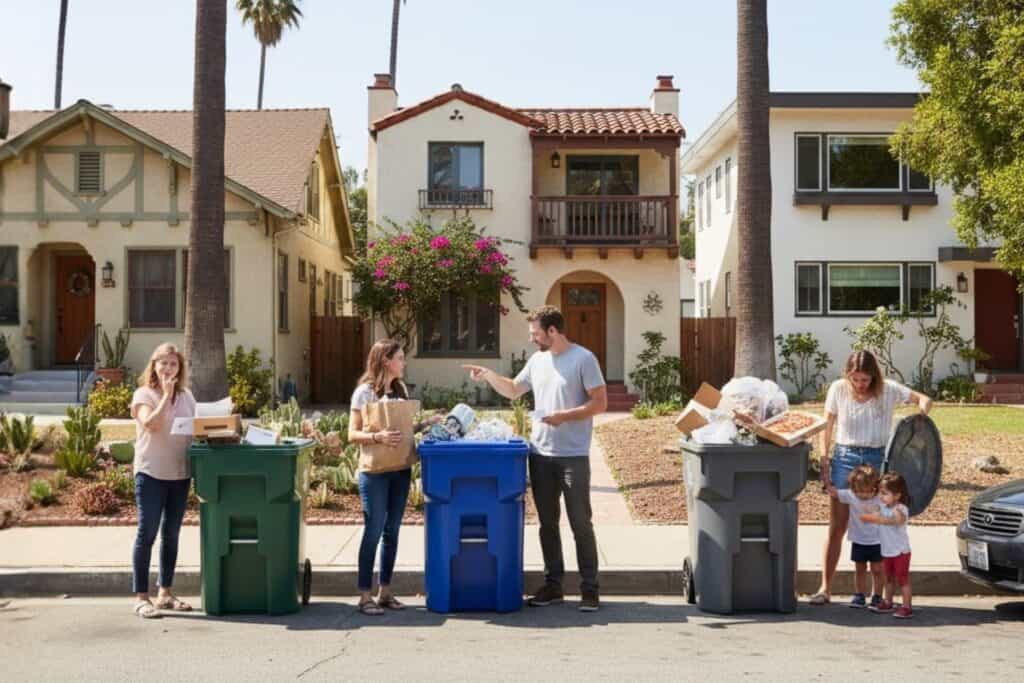
A quick “bin test” you can do this week
If you’re not sure what fits, try this simple test for one or two pickup cycles:
Step 1: The night before pickup, look at how full your trash bin really is.
Step 2: Notice what’s inside. Is it mostly food waste (better for organics)? Cardboard (better for recycling)? Or true trash?
Step 3: Ask yourself: Is your bin full because you didn’t break down boxes, or because you genuinely produce that much trash every week?
This helps you choose a bin size based on real habits—not guesses.
Can I change my bin size later if I pick the wrong one?
In many cases, homeowners can request adjustments, but the details (timing, process, fees, availability) can change. The best place to confirm the latest rules is the City’s official trash service updates page and fee calculator linked earlier.
That flexibility is why many homeowners start with the smallest bin they think they can reasonably manage. If it’s too tight, they adjust. If it works, they save money every year.
Why this matters for North Park homeowners (and future sellers)
Even if you’re not planning to sell soon, this new fee is now part of the ongoing cost of homeownership in North Park. And if you are planning to sell someday, buyers are paying closer attention to monthly and yearly costs than they used to, especially in metro San Diego, where affordability is already a big topic.
For more local homeowner resources, you can also explore our neighborhood and “sell your home” guide on our site:
If you’d like, you can also share this post with a neighbor who’s confused by the new tax bill line item—because you’re definitely not the only one asking questions.
Quick recap
If your goal is to lower what you pay, you generally want the smallest trash bin you can comfortably live with. For many smaller North Park households, that’s the 35-gallon. If you want less stress, the 65-gallon is a solid middle option. And if you’re consistently overflowing, the 95-gallon may be necessary—just know it comes with the highest annual cost.
And if you want the most accurate number for your exact address, use the City’s official fee calculator linked above.
Frequently Asked Questions (FAQ)
Does choosing a smaller trash bin lower the Measure B fee on my property tax bill?
Yes. The annual fee is tied to the trash bin size bundle you choose. A smaller trash bin generally means a lower annual trash fee.
Are recycling and organics bins different sizes depending on what I choose?
Typically, recycling and organics bins are provided as 95-gallon containers regardless of which trash size you choose. The main price difference comes from the trash bin size.
How much more does a 95-gallon bin cost compared to a 35-gallon bin?
Based on published monthly rates starting July 1, 2025, the difference is about $10.78 per month, or roughly $129 per year.
Can I change my bin size after I choose one?
Often, yes—but the process and timing can change. The safest way to confirm current options is to check the City of San Diego’s official trash service updates and fee calculator page.