
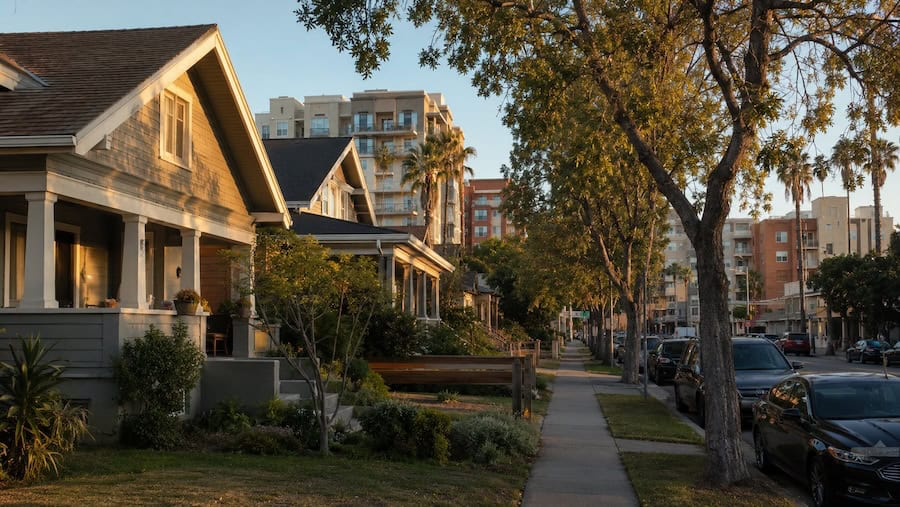
What does California’s SB 79 mean for homeowners in North Park, Golden Hill, and University Heights, and should you worry about your home value?
SB 79 lets developers build denser housing near transit stops, starting July 1, 2026. It targets parcels near qualifying transit, not quiet single-family blocks. For most North Park homeowners, your value is far more likely to hold or rise than fall.
Why North Park Homeowners Keep Asking Me About SB 79
If you own a home in North Park, Golden Hill, or University Heights, you have probably heard SB 79 come up at the Thursday Farmers Market on North Park Way or over a beer at Hamilton’s Tavern on 30th Street. The conversation is real, and the opinions are split right down the middle.
Some people think SB 79 will unlock value and finally add housing where we need it. Others worry it will put a five-story building next door. What I tell my clients after 22 years of selling homes in North Park is this: the fear is usually bigger than the reality. With 530 homes sold in these communities, I have watched wave after wave of housing law come through. The key is always understanding what the law actually does, block by block, versus what makes headlines. Whether you plan to stay or you are thinking about selling your North Park home, let me walk you through it.
What SB 79 Actually Does
Governor Newsom signed SB 79 into law on October 10, 2025. It is Senator Scott Wiener’s transit-oriented housing bill. Here is what it does in plain terms:
- It upzones land near transit: Within a half mile of a qualifying transit stop (a quarter mile in smaller cities), the state allows taller, denser multifamily housing than local zoning would normally permit
- Heights depend on the transit: Near the best rail stops, projects can reach roughly 75 feet and 120 units per acre. Near light rail and rapid bus lines, the cap is lower, around 55 to 65 feet
- San Diego is covered: The law applies in eight counties, and San Diego is one of them
- It takes effect July 1, 2026: Unless a city adopts its own state-approved transit housing plan first
- Cities keep some control: Local governments can shift density between sites, phase changes in, and protect historic and fire-prone areas, as long as they keep the total housing capacity the state expects
So why is this such a hot topic on the quieter residential streets off North Park Way and throughout Golden Hill? Because people hear “denser housing” and picture it landing on their block. In most cases, it will not.
The Part Most People Miss: SB 79 Does Not Rezone Your Single-Family Block
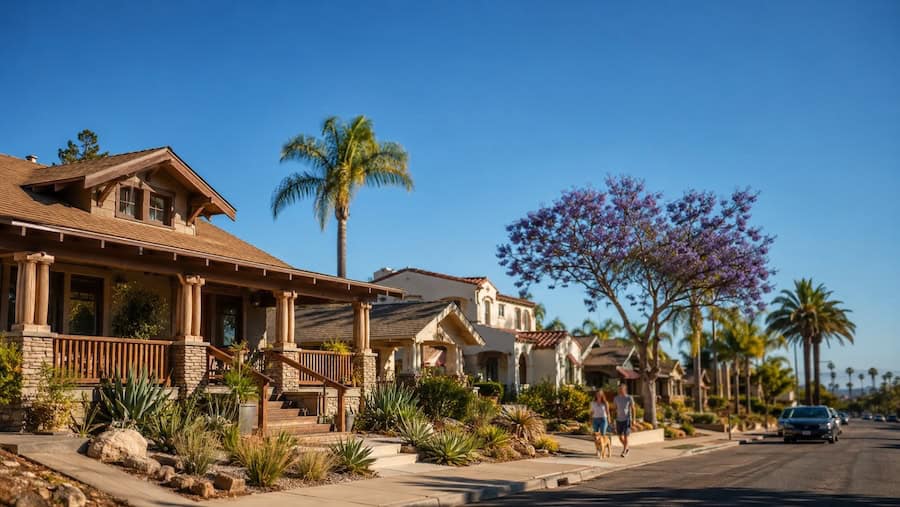
Here is the detail that changes everything. SB 79 applies to parcels already zoned residential, mixed-use, or commercial that sit near qualifying transit. It does not reach into a quiet interior street of Craftsman bungalows and upzone it.
In North Park, that means the parcels most likely to change are along the transit corridors, think University Avenue, El Cajon Boulevard, and Park Boulevard, where the commercial and multifamily lots already sit. If your home is on a tree-lined single-family block a few streets in, SB 79 does not directly touch it unless the city takes separate action. The San Diego Trolley does not run through North Park, so the question here is really about the rapid bus corridors, and the city’s own implementation will decide the exact stops that qualify.
This is the same pattern I explained when neighbors panicked about the older lot-split laws. If you want the companion piece on those, here is my take on SB 9 and SB 10 and our neighborhoods.
SB 79 Is Not SB 9, and Neither One Is an ADU
People mix these up constantly, so let me draw clean lines:
- SB 79 upzones land near transit for larger multifamily projects. It is a developer-scale tool, not a do-it-yourself one
- SB 9 lets an individual owner split a single-family lot and add units. It works anywhere the zoning qualifies, not just near transit
- An ADU is the backyard cottage path most North Park homeowners actually use to add value and income
For a single homeowner who wants to add value, SB 79 is not the tool. A detached ADU is almost always the faster, cheaper, more practical move, and it can pay you back at tax time through rental income.
Will SB 79 Hurt or Help Your North Park Home Value?
This is the question I get asked more than any other. Here is the honest answer based on what I am seeing.
The case for SB 79 helping your value:
If your lot sits in a transit zone, upzoning can raise its redevelopment value, since a buyer can now build more on it
More housing near transit can strengthen the walkable, amenity-rich lifestyle that draws buyers to these neighborhoods, which helps you sell for more money down the road
North Park’s typical home value is about $990,000 and up roughly 5% over the past year, which shows demand is not slowing down (Zillow, June 2026)
University Heights’ typical home value is about $923,000, up roughly 5.6% over the past year (Zillow, June 2026)
The case for concern:
A taller building could go up on a nearby corridor lot, changing the streetscape character you love about the North Park community
Parking near 30th Street and along the corridors could get tighter as density grows
The 1920s Craftsman aesthetic could contrast with newer, taller infill near transit
Here is what actually matters. SB 79 does not take effect until July 1, 2026, and it concentrates change on transit corridors, not interior blocks. The real driver of your home value in North Park, University Heights, and Golden Hill is not this law. It is limited inventory, a strong Walk Score of 86 out of 100, and buyer demand that is not going away. That demand is also part of how North Park is changing in 2026.
A couple in University Heights reached out to me recently, worried SB 79 would “ruin” their block near Park Boulevard. After we looked at the map together, they saw their street was well inside a single-family area, not on a transit-zoned corridor. They listed their home, and it sold in 19 days with multiple offers.
What About Historic Homes and Districts?
SB 79 gives cities room to protect historic resources when they plan for the new density. If your home is in a locally designated historic district, like South Park’s district established in 2017, those protections still matter and can shape what happens nearby. If you own an older home, it is also worth checking whether you qualify for Mills Act tax savings on North Park historic homes.
How to Make Smart Decisions About Your Property Right Now
Whether you are thinking about selling, building an ADU, or just want to understand your options, here is what to focus on:
Know where your lot sits. The single biggest question is whether your parcel is near a qualifying transit stop and zoned for it. Most interior single-family lots are not
Watch the city’s plan. San Diego can adopt its own transit housing plan and decide exactly which corridors and stops apply. That local decision matters more than the state headline
Understand the market context. North Park homes are selling in about 17 days, and you can see the latest North Park market numbers for detached versus condo trends. South Park’s detached homes in ZIP 92102 recently sold in under two weeks and above list price, around 102% (Redfin, early 2026). This is not a market where density fears are dragging values down
Talk to someone who knows these blocks. Generic statewide advice does not tell you whether your specific lot along Park Boulevard is affected or the one three streets over is not
Having closed over 530 transactions, predominantly in North Park and nearby metro neighborhoods since founding McT Real Estate Group in 2004, I can tell you that homeowners who come out ahead are the ones who make decisions based on data, not headlines.
Frequently Asked Questions
What is California SB 79 in simple terms?
SB 79 is a state law that lets developers build taller, denser multifamily housing near qualifying transit stops, overriding local density limits. Governor Newsom signed it in October 2025, and the main provisions take effect July 1, 2026. It is meant to add housing where people can get around without a car.
Does SB 79 apply to my single-family home in North Park?
In most cases, no. SB 79 applies to parcels already zoned residential, mixed-use, or commercial that sit near qualifying transit. It does not automatically rezone a quiet interior single-family street. The parcels most likely to change in North Park are along corridors like University Avenue, El Cajon Boulevard, and Park Boulevard. Your specific block depends on the city’s plan.
When does SB 79 take effect?
The main upzoning provisions take effect July 1, 2026, unless San Diego adopts its own state-approved transit-oriented housing plan before then. Cities can also phase the changes in and adjust which sites carry the added density.
How tall a building can SB 79 allow near me?
It depends on the transit. Near the highest-frequency rail stops, projects can reach roughly 75 feet and 120 units per acre. Near light rail and rapid bus lines, the limits are lower, around 55 to 65 feet. North Park is not served by the Trolley, so the question here centers on rapid bus corridors and how the city classifies them.
Will SB 79 lower my North Park home value?
Based on current data, there is no sign of that. North Park’s typical home value is about $990,000 and up roughly 5% over the past year (Zillow, June 2026). If anything, a lot inside a transit zone can gain redevelopment value. Interior single-family blocks are not directly affected.
What is the difference between SB 79 and SB 9?
SB 79 upzones land near transit for larger multifamily projects, a developer-scale tool. SB 9 lets an individual owner split a single-family lot and add units, and it is not tied to transit. They are two different laws that solve two different problems.
Is an ADU still a better option for most homeowners than SB 79?
For a single homeowner adding value or income, yes. SB 79 is built for developers assembling larger projects near transit. An ADU is the practical path most North Park owners use, and it is faster, cheaper, and better understood by lenders and appraisers.
Can the city of San Diego change how SB 79 applies here?
Yes. Cities can adopt their own state-approved transit housing plan, shift density between sites, phase changes in over a few years, and add protections for historic and fire-prone areas, as long as they keep the total housing capacity the state expects. That local plan is the thing to watch.
The Bottom Line
SB 79 is real, and it is a meaningful change to how California builds near transit. But for most North Park, Golden Hill, and University Heights homeowners, the day-to-day impact will be limited. The law targets transit corridors, not your quiet interior block, and it does not even take effect until July 2026. Your home values here keep climbing, driven by limited inventory, strong demand, and a walkable lifestyle that is hard to replace.
If you want to know whether your specific lot sits in an SB 79 transit zone or well outside one, I would love to look at it with you. As a North Park resident since 2001 and the founder of McT Real Estate Group, I have spent over two decades helping homeowners in these exact neighborhoods make smart, informed decisions. You can reach me, Z. McT-Contreras, at 619-736-7003 or through McT Real Estate Group. Let’s look at your lot, your goals, and figure out the best path forward together.