

Updated: February 11, 2026 | Originally Published: December 22, 2024
If you’re looking into the San Diego real estate market, chances are you’ve come across the term “bungalow” and are wondering what it really means. This charming housing style holds a special place in neighborhoods such as North Park, South Park, University Heights, Normal Heights, and others across San Diego’s Metro neighborhoods. But what exactly is a bungalow? This guide will explore the defining features and history of bungalow homes and explain why they remain a popular choice for buyers looking to live in San Diego.
What is a Bungalow?
A bungalow is a small, single-family home, typically one story. In San Diego, bungalows are especially popular in historic neighborhoods such as North Park and South Park, where their distinctive architecture enhances the character of the neighborhoods.
Key features of bungalow homes include:
- Roofs are Low-Pitched: The sloped roof is a hallmark of bungalows, often giving them a cozy, compact look.
- The Footprint is Compact: Bungalows are known for being small yet functional, with efficient use of space.
- Open Floor Plans: Most updated homes feature open layouts that seamlessly connect the living, dining, and kitchen areas. This design enhances the sense of space and makes them ideal for entertaining.
- Front Porches: A defining feature of many bungalows. The front porch adds outdoor living space and contributes to the inviting curb appeal in San Diego’s metro neighborhoods.
- Craftsman Details: Many bungalows, especially in San Diego, reflect the Craftsman style, with intricate woodwork, built-in cabinetry, and natural materials.
A Brief History of Bungalows
The term “bungalow” originates from Bengal, India, where these homes were first designed in the 17th century for British travelers. The style eventually gained popularity in Britain before reaching the United States in the early 20th century.
In Southern California—especially in cities like San Diego and Los Angeles—bungalows became synonymous with affordable housing during the early 1900s. Their small size, simple construction, and adaptability made them a favorite for urban and suburban areas.
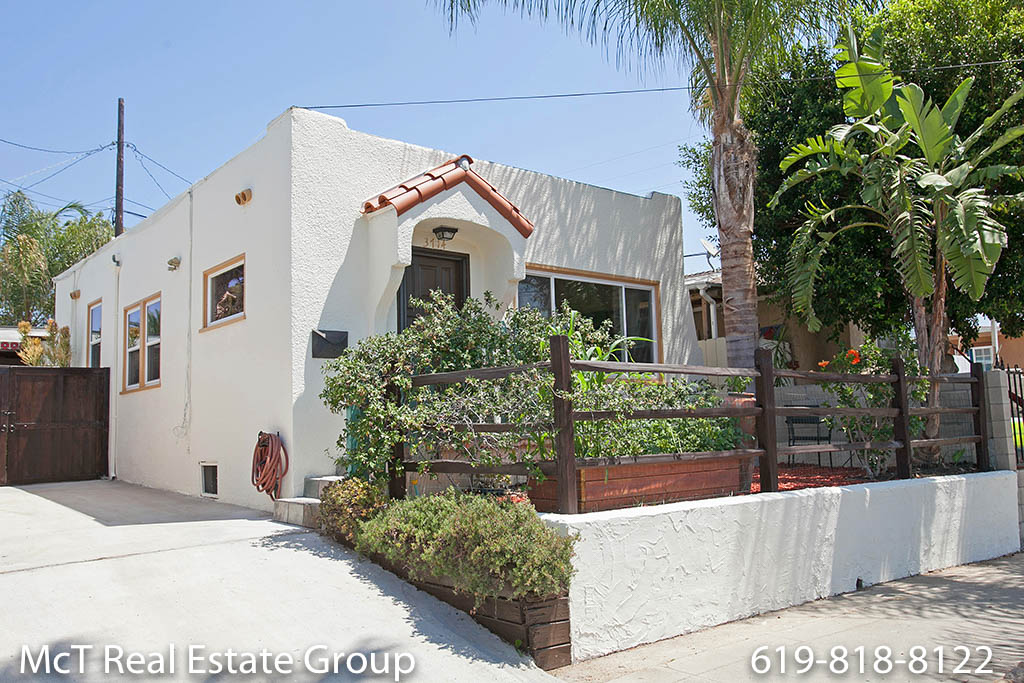
The North Park and South Park neighborhoods in San Diego feature a wealth of historic bungalows, many lovingly restored to preserve their timeless charm. Others have been modernized to attract today’s younger homebuyers. These homes reflect the region’s emphasis on outdoor living and harmony with nature.
Types of Bungalows You’ll Find in San Diego
San Diego doesn’t have just one type of bungalow. You’ll find several distinct styles across the city’s metro neighborhoods. Here’s what to look for.
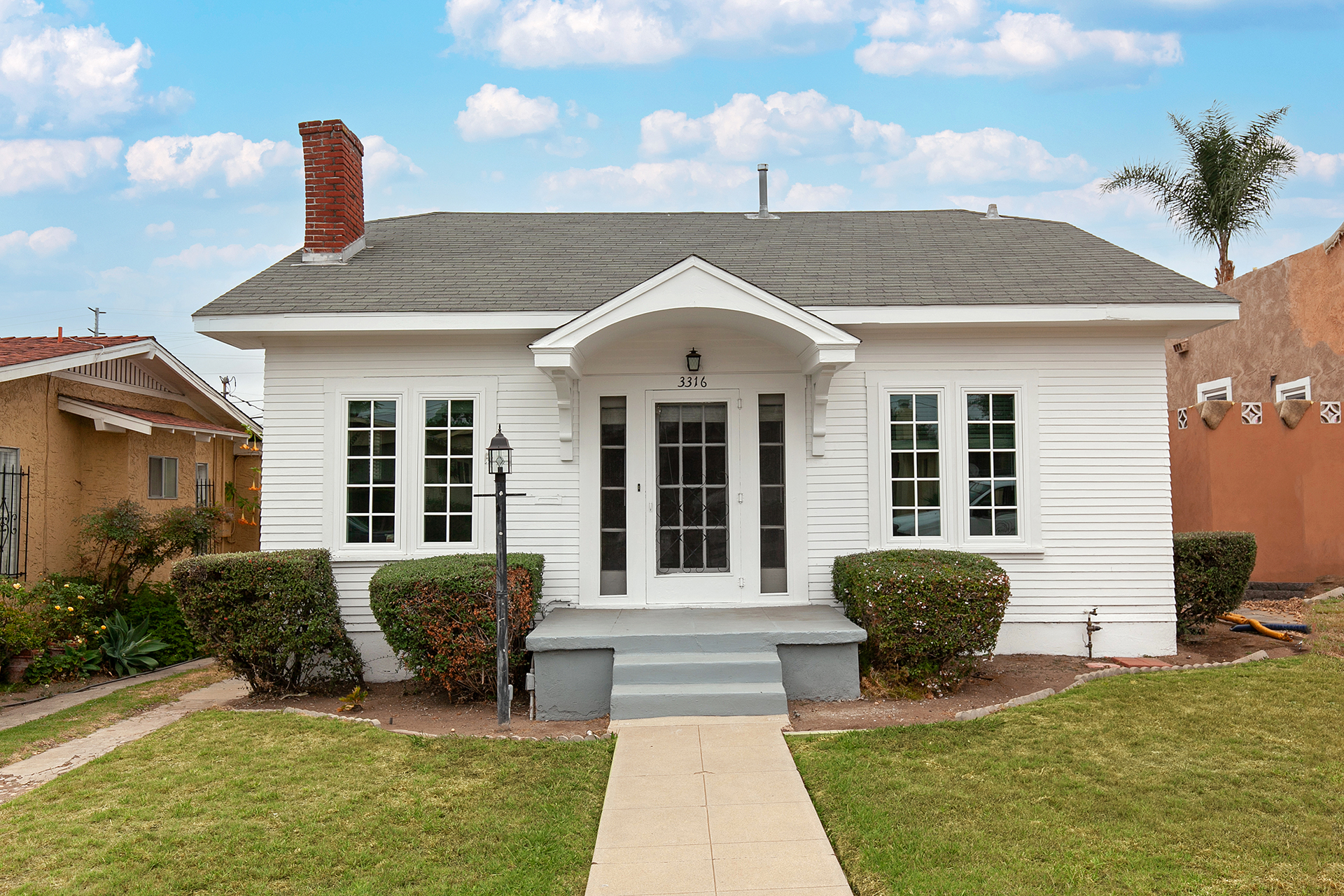
California Bungalow
The California bungalow is the most common style you’ll see in North Park, South Park, and Normal Heights. These homes were built primarily between 1905 and 1930. They sit low to the ground with wide, front-facing gables and deep overhanging eaves.
You’ll recognize them by their stucco or wood shingle exteriors, exposed rafter tails, and generous front porches supported by tapered columns. Most are one story, between 800 and 1,200 square feet, on standard 5,000-square-foot city lots.
California bungalows were designed for the climate here. The deep eaves block direct summer sun while allowing low winter light to warm the interior. The open floor plans connect to covered porches, making indoor-outdoor living feel natural – something San Diego homeowners still want today.
Many of the California bungalows you’ll find in North Park have been updated with modern kitchens and bathrooms while keeping the original built-in cabinetry and hardwood floors. That combination of original character and modern function is what drives buyer demand.
Craftsman Bungalow
Craftsman bungalows share DNA with California bungalows but take the handcrafted details further. Think exposed beam ceilings, art glass windows, river rock fireplaces, and intricate woodwork throughout.
In San Diego, the best concentration of Craftsman bungalows is in North Park’s Dryden Historic District. Architect David Owen Dryden designed over 50 bungalows there between 1911 and 1919. His homes are recognizable by their distinctive rooflines and custom wood detailing. Walking through the Dryden District today feels like stepping into a living architecture museum.
You’ll also find Craftsman bungalows in University Heights, Mission Hills, Hillcrest, and Kensington. Many of these homes are eligible for the Mills Act, which can reduce property taxes by 40-60% in exchange for maintaining the home’s historic character.
What’s the difference between a California bungalow and a Craftsman? The California bungalow is simpler – cleaner lines, less ornamentation. The Craftsman pushes the handcrafted aesthetic further with more custom woodwork, built-ins, and decorative details. In San Diego, you’ll often see homes that blend both styles.
Spanish Revival Bungalow
Spanish Revival bungalows became popular in San Diego after the 1915 Panama-California Exposition in Balboa Park. The exposition buildings, designed by architect Bertram Goodhue, sparked a citywide appetite for Spanish-influenced architecture.
You’ll spot these bungalows by their thick stucco walls, red clay tile roofs, arched doorways, and wrought iron details. Inside, expect hand-painted tile, dark wood beams, and small interior courtyards.
Mission Hills has the highest concentration of Spanish Revival bungalows in San Diego. You’ll also find them in Hillcrest, Kensington, and parts of North Park. These homes tend to sit on slightly larger lots than California or Craftsman bungalows and often command higher prices because of their architectural detail and desirable neighborhood locations.
Bungalow Courts
Bungalow courts are a housing type unique to Southern California, and San Diego has some of the best-preserved examples in the state.
A bungalow court is a cluster of small bungalow units arranged around a shared courtyard or garden. They were built mostly between 1910 and 1940 to provide affordable, community-oriented housing for people who wanted the independence of a house without the cost of a full single-family lot.
Most courts have 4 to 12 units with one or two bedrooms each. The shared courtyard creates a built-in sense of community that still appeals to today’s buyers and renters. You’ll find bungalow courts in Hillcrest, Golden Hill, Normal Heights, and North Park – often tucked on side streets where you might walk right past them without realizing they’re there.
Some bungalow courts have been converted to condos. Others remain as rental properties. A few have earned historic designation, which protects them from demolition and may qualify owners for Mills Act tax benefits.
If you’re looking for something that feels like a small neighborhood within a neighborhood, a bungalow court unit is worth exploring.
Advantages of Living in a Bungalow
Bungalows offer several practical and lifestyle benefits, making them a sought-after option within the San Diego real estate market:
1. Affordability
Bungalows typically have smaller square footage, which can make them more affordable than larger single-family homes. In areas like Normal Heights and City Heights, bungalows offer a cost-effective entry point into the housing market while maintaining access to a vibrant community.
2. Privacy
Bungalows are detached homes that offer unmatched privacy compared to condos or apartments. Many bungalows in North Park and similar neighborhoods have spacious yards, which can provide additional privacy through landscaping.

3. Accessibility
Their single-story layouts make bungalows a practical choice for those who want to age in place or for families with younger children.
How Much Do Bungalows Cost in San Diego?
Bungalow prices in San Diego vary significantly by neighborhood, condition, and lot size. Here’s a general breakdown of what you can expect to pay in 2026.
Bungalow Prices by San Diego Neighborhood
North Park – Most bungalows here sell between $850,000 and $1.3 million, depending on upgrades and location. Updated Craftsman bungalows in the Dryden Historic District can push higher. Fixer-uppers occasionally appear in the low $800s but move fast.
South Park – Expect $800,000 to $1.6 million for a standout home, depending on upgrades and location. South Park bungalows tend to sit on quieter streets with slightly less foot traffic than North Park, which some buyers prefer.
University Heights – Prices range from $900,000 to $1.2 million, depending on updates and location. This neighborhood offers some of the best value for bungalow buyers who want walkability to restaurants and shops without North Park pricing.
Normal Heights – One of the more affordable entry points for bungalow buyers. Prices typically range from $725,000 to $1.5 million, depending on upgrades and location. You’ll find both original-condition homes and fully renovated options here.
Mission Hills – Spanish Revival bungalows here command a premium. Expect $1.2 million to $3 million, depending on lot size, views, and condition.
Golden Hill – Still one of San Diego’s more affordable neighborhoods for bungalow buyers. Prices range from $800,000 to $1.2 million, depending on upgrades and location. Golden Hill is drawing more buyer attention as prices climb in neighboring areas.
Where to Find Bungalows in San Diego
Bungalows aren’t spread evenly across San Diego. They’re concentrated in the city’s older metro neighborhoods – the areas that were developed between 1905 and 1940 when bungalow construction was at its peak. Here’s where to look.
North Park
North Park has the largest concentration of bungalows in San Diego. Some estimates place it among the densest concentrations of bungalows in the country. You’ll find California bungalows, Craftsman bungalows, and a few Spanish Revival examples – sometimes all on the same block.
The Dryden Historic District on the west side of North Park is the crown jewel for Craftsman bungalow lovers. The 30th Street corridor gives residents walkable access to restaurants, coffee shops, breweries, and the North Park Thursday Market.
If you want a bungalow and you want neighborhood energy, North Park is the place to start.
South Park
South Park is North Park’s quieter neighbor to the south. The bungalow stock here is well-preserved, with many homes retaining original details such as wood-framed windows, built-in hutches, and covered front porches.
South Park’s smaller commercial strip along Fern Street and Juniper Street offers a village feel that pairs well with bungalow living. Proximity to Balboa Park is a major draw – some South Park bungalows sit just blocks from hiking trails and the park’s museums.
University Heights
University Heights offers a mix of California and Craftsman bungalows along tree-lined streets. The neighborhood sits between North Park and Hillcrest, giving residents easy access to both areas.
The stretch along Park Boulevard and the Trolley Barn Park area has some of the most intact original bungalows in the neighborhood. University Heights tends to offer slightly lower prices than North Park for comparable homes, making it a smart pick for buyers who want the bungalow lifestyle without peak pricing.
Normal Heights
Normal Heights is one of the most affordable entry points for bungalow buyers in San Diego’s urban core. The Adams Avenue corridor is the neighborhood’s backbone – a walkable stretch of restaurants, bars, and local shops that hosts the annual Adams Avenue Street Fair.
You’ll find a mix of original-condition bungalows and fully renovated homes here. Normal Heights attracts first-time buyers and investors alike because the price-to-location ratio is hard to beat.
Mission Hills
Mission Hills is where you’ll find San Diego’s best Spanish Revival bungalows. The neighborhood was developed slightly earlier than North Park and attracted a wealthier buyer base, as evidenced by larger lots, more ornate architecture, and canyon-edge locations.
Mission Hills bungalows tend to be pricier, but you’re paying for bigger lots, better views, and some of the most architecturally significant homes in the city. Fort Stockton Drive and Sunset Boulevard are two streets known for standout bungalows.
Golden Hill
Golden Hill is still flying under the radar for many bungalow buyers – which means opportunity. The neighborhood sits just south of Balboa Park and has a growing restaurant and café scene along 25th Street.
Bungalow prices in Golden Hill are among the lowest in San Diego’s urban core. You’ll find homes that need work alongside fully updated properties. For buyers willing to renovate, Golden Hill offers strong upside as the neighborhood continues to develop.
Hillcrest
Hillcrest is best known for its commercial district, but the residential side streets hold a surprising number of bungalows and bungalow courts. Many are within walking distance of Balboa Park.
The bungalow courts in Hillcrest are especially noteworthy – small clusters of units around shared courtyards that offer a housing experience you can’t find in newer construction. Prices here fall between North Park and Mission Hills, depending on the specific block and condition.
What Drives Bungalow Pricing?
Square footage matters, but it’s not the whole story. These factors have the biggest impact on what you’ll pay for a bungalow in San Diego:
- Lot size – A bungalow on a 7,000+ square foot lot is worth significantly more than one on a standard 5,000 square foot lot because of ADU potential
- ADU potential – San Diego’s ADU-friendly regulations mean a bungalow lot with room for an accessory dwelling unit adds real value. Building an ADU typically costs $200,000-$450,000+, depending on size and design
- Historic designation: Homes with Mills Act contracts can save owners 40-60% on annual property taxes. That tax savings effectively increases your buying power
- Condition of systems – Updated plumbing, electrical, and foundation work adds $50,000-$100,000 in value compared to original-condition homes
- Walkability – Bungalows within walking distance of commercial corridors like 30th Street in North Park or Adams Avenue in Normal Heights sell faster and for more
Are Bungalows a Good Investment in San Diego?
Bungalows in San Diego’s metro neighborhoods have consistently appreciated faster than the citywide average. The combination of limited supply (they’re not building new ones), strong buyer demand, and desirable locations keeps values climbing.
The biggest opportunity right now? Buying a bungalow on an oversized lot and adding an ADU. The rental income from a well-built ADU can offset a significant portion of your mortgage payment.
Want to know what a specific bungalow is worth? Get a free home valuation from the McT Real Estate Group.

What to Look for When Buying a Bungalow in San Diego
Bungalows have character. They also have an age. Most San Diego bungalows are 80 to 120 years old. That means you need to know what to inspect before you make an offer. Here’s what matters most.
Foundation
Many pre-1930 bungalows in San Diego sit on raised foundations with crawl spaces underneath. Check for cracking, settling, or moisture damage. Post-and-pier foundations are common and can shift over time. A foundation inspection is non-negotiable on any bungalow purchase.
Electrical
Original bungalows were wired with knob-and-tube electrical. Some homes have been fully rewired. Others still have knob-and-tube in the walls or attic. This matters for two reasons: insurance companies may charge higher premiums or decline coverage, and it limits your ability to add circuits for modern appliances.
Ask whether the electrical panel has been upgraded to at least 100 amps. A full rewire typically costs $8,000 to $15,000, depending on the size of the home.
Plumbing
Older bungalows may have original galvanized steel pipes, which corrode from the inside over time and restrict water flow. Many updated bungalows have been re-piped with copper or PEX. If the home still has galvanized plumbing, factor in $5,000 to $12,000 for a full re-pipe.
Roof
Bungalow roofs are low-pitched, which means water drains more slowly than on steep-pitched roofs. Check the age of the roofing material and look for signs of ponding or past leaks. A new roof on a bungalow typically runs $10,000 to $20,000.
Unpermitted Additions
This is a big one. Many San Diego bungalows have been modified over the decades – enclosed porches, converted garages, added bedrooms, or expanded kitchens. Not all of this work was done with permits.
Unpermitted work can cause problems when you sell, refinance, or try to insure the home. Pull the permit history from the City of San Diego’s Development Services Department before closing. Your agent should help you with this.
ADU Potential
San Diego’s regulations make it easier than most cities to add an Accessory Dwelling Unit (ADU) to your property. A bungalow on a lot with room for a detached ADU is significantly more valuable than one on a maxed-out lot.
Look for lots of 5,000 square feet or larger with rear-yard access. A well-built ADU can generate $1,500 to $2,500+ per month in rental income, which changes the math on your mortgage payment entirely.
Mills Act Eligibility
If the bungalow is designated as historic – or could qualify for historic designation – it may be eligible for a Mills Act contract. This is a property tax reduction program that can save you 40-60% on your annual tax bill, provided you maintain the home’s historic character.
Not every old bungalow qualifies. The home needs to meet specific criteria set by the City of San Diego’s Historical Resources Board. But when it does qualify, the savings are substantial – often $5,000 to $10,000+ per year.
Get Expert Help
Buying a bungalow is different from buying new construction. You need an agent who knows these homes, these neighborhoods, and the specific issues that come with older properties. The McT Real Estate Group has sold over 520 homes in San Diego’s metro neighborhoods and can walk you through every step. Contact us to start your search.
Frequently Asked Questions About Bungalow Homes in San Diego
What is the average cost of a bungalow in San Diego?
Bungalow prices range from around $725,000 in Normal Heights to over $3 million in Mission Hills. Most bungalows in popular neighborhoods like North Park sell between $850,000 and $1.3 million depending on condition, lot size, and location.
What neighborhoods in San Diego have the most bungalows?
North Park has the largest concentration of bungalows in San Diego and one of the densest in the country. You’ll also find large numbers in South Park, University Heights, Normal Heights, Mission Hills, Golden Hill, and Hillcrest.
What is the difference between a bungalow and a Craftsman home?
A bungalow is a housing type defined by its single-story layout, compact footprint, and front porch. Craftsman is an architectural style known for handcrafted woodwork, built-in cabinetry, and natural materials. Many bungalows in San Diego are Craftsman-style, but not all bungalows are Craftsman and not all Craftsman homes are bungalows.
Can you add an ADU to a bungalow lot in San Diego?
Yes. San Diego’s ADU regulations make it easier than most cities to add an Accessory Dwelling Unit to your property. Bungalow lots of 5,000 square feet or larger with rear-yard access are strong candidates. A well-built ADU can generate $1,500 to $2,500+ per month in rental income.
What is the Mills Act, and how does it apply to bungalows?
The Mills Act is a property tax reduction program for historically designated homes in San Diego. Qualifying bungalow owners can save 40-60% on annual property taxes in exchange for maintaining the home’s historic character. Savings typically range from $5,000 to $10,000+ per year.
How old are most bungalows in North Park?
Most bungalows in North Park were built between 1905 and 1930, making them 95 to 120 years old. The Dryden Historic District contains some of the best-preserved examples, designed by architect David Owen Dryden between 1911 and 1919.
Are bungalows a good investment in San Diego?
Bungalows in San Diego’s metro neighborhoods have consistently appreciated faster than the citywide average. Limited supply, strong buyer demand, and desirable locations drive long-term value. The biggest opportunity is to buy a bungalow on an oversized lot and add an ADU for rental income. Get a free home valuation to see what a specific bungalow is worth today.