

Last updated: February 2026
Thinking about moving to San Diego? Many people who visit fall in love with the city, just like I did 20-plus years ago. People relocate here from all over the country. I’ve met many people who’ve moved here from LA, the Bay Area, New York, Texas, and the Midwest. Everyone I’ve met is drawn by the weather, the beaches, and the lifestyle. But San Diego isn’t perfect, and it’s definitely not cheap, but that’s all relative to where you are relocating from. Before you start packing, here’s an honest look at what daily life here actually looks like.

If you’re already planning a move, our San Diego Relocation Guide is a good place to start.
The Pros of Living in San Diego
The Weather Is as Good as People Say
This is absolutely true. The average temperature ranges from 60 to 77 degrees most of the year. You can be outside every single day. No shoveling snow, ever, and no seasonal depression from months of gray sky. The one exception: May and June are what locals call “May Gray, June Gloom.” There are often overcast mornings that burn off by afternoon. It’s mild compared to what most of the country deals with, for sure.
You Can Be Outdoors Year-Round
Surfing, hiking, biking, kayaking, running; it all happens here 12 months a year. Balboa Park alone has 1,200 acres of trails and gardens. The coastline stretches 70 miles. You’re never more than a 20-minute drive from a beach, a canyon trail, or a park where your dog can run off-leash.
The Food Scene Is Real
San Diego’s proximity to Mexico means the Mexican food here is some of the best in the country. Beyond that, you’ll find everything from plant-based sushi in North Park to fresh seafood in Point Loma to farm-to-table dining in Little Italy. The farmers markets run every day of the week in different neighborhoods, and the craft brewery scene has over 150 breweries across the county.
The Neighborhoods Have Distinct Personalities
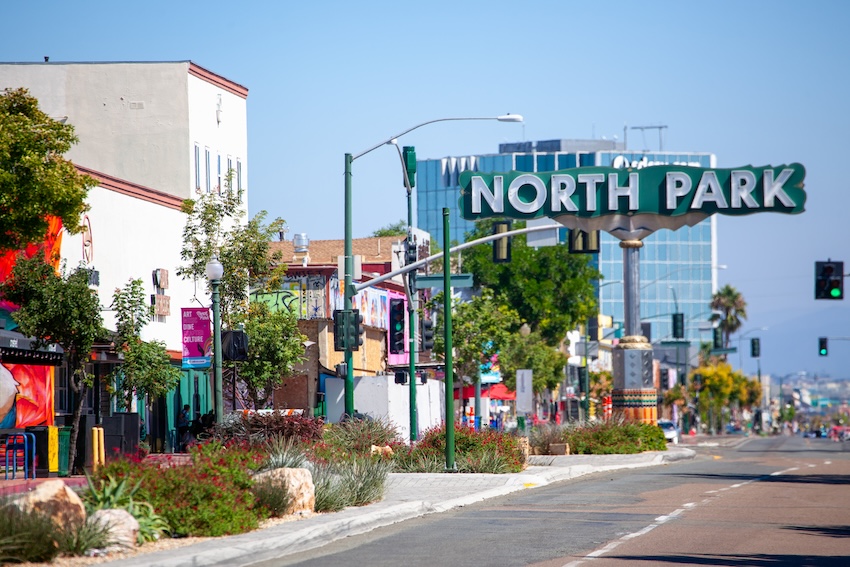
San Diego doesn’t feel like one big city. It feels like a collection of small towns. North Park has walkability, Craftsman homes, and a strong local business scene. Ocean Beach is funky and tight-knit. South Park is quiet and tree-lined. Mission Hills has canyon views and historic homes. Each neighborhood attracts a different type of person, and that’s part of what makes living here feel personal.
It’s Dog Friendly
San Diego is one of the most dog-friendly cities in the country. Off-leash beaches like Ocean Beach Dog Beach and Coronado Dog Beach let your dog run free on the sand. Parks like Morley Field in North Park, Nate’s Point at Balboa Park, and Grape Street Dog Park in South Park are neighborhood staples where residents gather every morning and evening. If you have a dog, this city makes it easy.

Strong Job Market in Key Industries
San Diego’s economy runs on biotech, healthcare, military defense, and tech. UC San Diego, Scripps Health, Qualcomm, and dozens of biotech firms are headquartered here. Salaries in these sectors tend to run above the national average, which helps offset the cost of living, though it doesn’t eliminate it.
Good Schools and Universities
UC San Diego, San Diego State University, and the University of San Diego are all here. K-12 schools vary by neighborhood, but many areas, especially in the metro communities, have solid public and charter school options. It’s worth researching schools by specific neighborhood rather than relying on city-wide rankings.
The Cons of Living in San Diego
Housing Is Expensive
This is the biggest con. The median home price in San Diego sits around $1 million for a detached single-family home. Condos and townhomes are more accessible, averaging closer to $650,000, but it’s still a major financial commitment. Rent isn’t cheap either. A one-bedroom in a central neighborhood can run $2,000 to $2,700 per month.
That said, the housing market varies by neighborhood. Some areas offer more entry points than others. For a current breakdown of what homes actually cost, check out our cost of homes in San Diego page. And if you’re ready to buy, our step-by-step buying guide walks you through the process.
California Taxes Are High
California has the highest state income tax rate in the country, topping out at 13.3%. If you’re coming from a state with no income tax — like Texas, Florida, or Washington — this will be a noticeable hit on your paycheck. Property taxes are more moderate (around 1.1% of assessed value), but the high home prices mean the dollar amount is still significant.
Traffic Is Getting Worse
San Diego traffic isn’t LA-level, but it’s heading in that direction. The I-5, I-15, and I-8 corridors get congested during rush hours, and the growing population isn’t helping. If you work in one part of the city and live in another, your commute matters. One of the advantages of living in a walkable metro neighborhood like North Park, South Park, or Hillcrest is that you can reduce your dependence on the freeway for daily errands and social life.
Public Transit Is Limited
The San Diego Trolley and bus system exists, but they don’t cover the city well enough to replace a car for most people. If you live and work along the trolley line, it can work. Otherwise, plan on driving. The city is investing in bike infrastructure and transit improvements, but it’s not there yet.
Water Scarcity Is a Real Issue
San Diego imports most of its water. During drought years — which are frequent in California — you’ll deal with water restrictions, higher utility bills, and a general awareness that water is not unlimited here. This is a long-term reality of living in Southern California.
Homelessness Is Visible
Like most major California cities, San Diego has a significant homeless population. It’s most visible in Downtown, parts of Hillcrest, and along certain corridors. The city and county are actively working on solutions, but it remains an ongoing challenge that affects daily life in some areas more than others.
So Is Living in San Diego Worth It?
For most people who move here, yes. The lifestyle, weather, and access to the outdoors are hard to match anywhere else in the country. But you need to go in with open eyes about the cost. Housing will likely be your biggest expense, and California taxes will take a bigger bite than you’re used to if you’re coming from out of state.
The key is choosing the right neighborhood. Where you live in San Diego shapes your entire experience: your commute, walkability, community, and home value over time.

Where Should You Live in San Diego?
Every neighborhood has a different feel. Here are a few of our community guides to help you explore:
- North Park – Walkable, local restaurants, Craftsman and Spanish-style homes, strong community feel
- South Park -Quiet, tree-lined streets, tight inventory, close to Balboa Park
- University Heights – Centrally located, mix of condos and single-family homes
- Normal Heights -More affordable entry points, Adams Avenue shops and restaurants
- Golden Hill – Victorian homes, close to Downtown, up-and-coming
- Ocean Beach – Beach lifestyle, tight-knit community, limited inventory
- Point Loma – Coastal, established, views of the bay and ocean
- Mission Hills – Canyon views, historic homes, close to Hillcrest and Downtown
If you want walkability, food, and culture without the price tag of La Jolla or the density of Downtown, neighborhoods like North Park offer the best of both worlds. It’s where we live, work, and help people buy and sell homes every day.
Ready to Make the Move?
If you’re seriously considering San Diego, start with our free Relocation Guide. It covers the basics of making the transition. And when you’re ready to look at homes, our step-by-step buying guide walks you through the entire process from pre-approval to closing.
Have questions? Contact the McT Real Estate Group. We’ve helped hundreds of people relocate to San Diego and find the right neighborhood for their lifestyle and budget.