
San Diego Home Staging: FAQs Answered

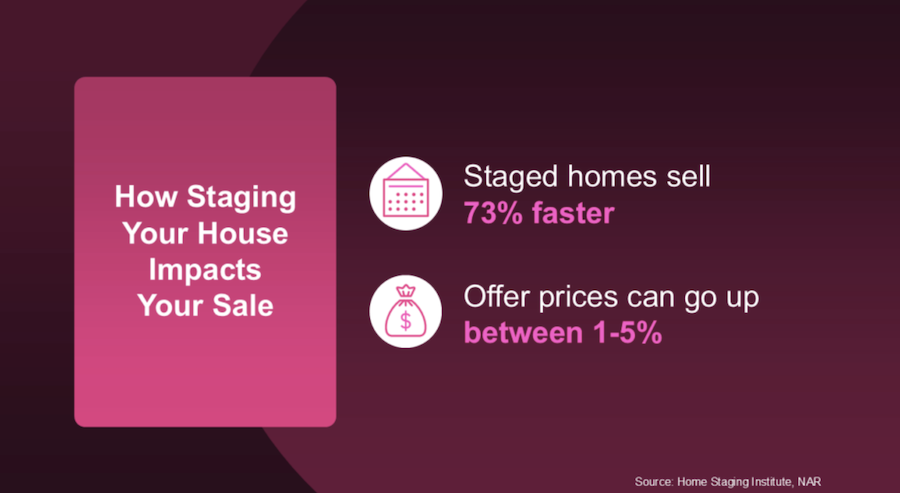
San Diego home staging infographic showing that staged homes sell 73% faster and can increase offer prices by 1 to 5 percent

Updated: Last updated: March 2026

Have you ever heard that staging your home can make a big difference when it’s time to sell? But what does home staging really entail, and is it worth the time and money? To help you determine how much staging should be a part of your selling strategy, we’ve answered some of the most common questions about the process. These insights will help you understand why staging can be a game-changer when getting your San Diego home ready for the market.

What Is Home Staging?

Making your home look as appealing as possible to the right buyers is what home staging is all about. It means arranging the furniture in a specific way, adding decorations, and highlighting the best aspects of your home to entice potential homebuyers. Whether it’s the minor simple fixes like decluttering and adding a new coat of paint, or the more elaborate setups like renting furniture and adding some stylish touches. The good news is that staging can be tailored to your needs and budget. In a competitive market like San Diego, where first impressions are crucial, staging your home can help your property stand out and make a lasting impression.

How Does Home Staging Help Sell My House?

Staging is a big part of making your home more appealing to buyers. Studies show time and time again that a well-staged home gets more interest, sells faster, and sometimes, when you play your cards just right, even for more money, compared to a vacant home or just an unstaged property. In a competitive market like San Diego, where there are so many options for buyers to choose from, a beautifully staged home can make all the difference and might be that spark that makes your home stand out from the rest. By showcasing your home in its best light, you give buyers the opportunity to envision themselves living in that space, which in turn might make them want to start sending out offers for the property.

What Are My Staging Options?

Now that you understand the value of staging your home before selling, it’s time to explore your options. The most common approach is to rely on your real estate agent for expert guidance on the matter. Agents carry invaluable insight into what buyers in the area want because of their firsthand experience in showings and constant feedback from open houses that they have held. Their expertise can help you get your home market ready with practical, straightforward advice. Basic home staging with your agent typically includes things like:

  • Decluttering and depersonalizing: getting rid of personal items and family photos so that buyers can come in and envision themselves there.
  • Rearranging Furniture: this is to improve the room’s overall flow and make spaces appear larger.
  • Adding Simple Accents: Incorporating plants, artwork, or other items to give the house a warmer and cozier touch without overdoing it.

If your home requires a more significant transformation, full-service home staging might be the solution. This option involves hiring a professional staging company that handles everything, from making recommendations to implementing changes. Full-service staging often includes renting furniture, decor, and other items to completely refresh your space. While it’s a more hands-on approach, it can be a worthwhile investment for homes needing extra attention.

In a competitive market like San Diego, both basic home staging and full-service staging can make your home more appealing to buyers and help you secure a faster, more favorable sale.

A White and Gray Home Staged Living Room

Staging a Historic Home in North Park: What’s Different

If you’re selling in North Park, staging isn’t one-size-fits-all. Most homes in 92104 were built between 1920 and 1940. They have Craftsman woodwork, Spanish arches, coved ceilings, and built-in details that buyers specifically seek out. Your staging plan should work with that architecture, not fight it.

Here’s what that means in practice:

  • Scale your furniture to the rooms. Oversized sectionals and bulky entertainment centers overwhelm Craftsman-scale living rooms. Use right-sized pieces that let the room breathe and make square footage feel bigger.
  • Skip the heavy gray-on-gray palette. That trend fights the warm wood tones found in most North Park homes. Choose crisp neutrals – soft whites, warm taupes, light sage – that complement original trim and built-ins instead of competing with them.
  • Showcase the details buyers came for. Original built-in bookshelves, arched doorways, wood-framed windows, and dining room plate rails are selling points. Style around them with minimal decor that draws the eye, not away from them.
  • Light every room intentionally. Many Craftsman bungalows have deep eaves and smaller windows. Replace yellowed bulbs with 3000K LEDs. Add lamps to balance light in rooms that photograph dark. North-facing homes need extra attention here.
  • Stage outdoor spaces as living areas. In North Park, usable outdoor space raises perceived square footage. A patio with a small table, two chairs, and a plant or two reads as bonus living area to buyers – especially when square footage is tight.

A typical professional staging fee in North Park runs around $2,000 to $5,000. On a $900,000 list price, that’s less than 1 percent of your asking price – and it’s often repaid several times over in price strength and speed to close.

Staging Tips by North Park Neighborhood

Not every pocket of North Park stages the same way. Here’s what works in specific areas:

Morley Field and Burlingame: You’ll find larger lots and strong period details here. Stage to highlight wood trim, coved ceilings, and dining room built-ins. Homes in these pockets tend to price at or above the neighborhood median, so professional staging often pays back quickly. Buyers expect move-in ready at this price point.

University Heights and Normal Heights: Smaller rooms and hillside lots reward scaled-down furniture, vertical storage, and bright textiles. If your budget is tight, a DIY approach plus a one-time professional styling consult can work well here. Focus on making rooms feel open and bright.

South Park and central North Park near 30th Street: High foot traffic and strong buyer pools mean your first-week presentation counts the most. A $2,000-$5,000 professional staging investment can help your photos dominate the first page of search results, then convert online clicks into clean offers at the showing.

Across all these areas, stage any entry or porch as a welcoming transition space. An entry bench with hooks, a clean front porch with a plant, or a simple patio setup signals that the home has been cared for – and that the lifestyle works.


How Do I Know Which Staging Option to Choose?

Not sure which staging approach is right for your home? You don’t have to figure it out on your own. Your real estate agent is there to guide you and recommend the level of staging that will make the biggest impact on your property’s appeal and value in the market.

Here are some key factors your agent will evaluate to help you decide:

  • Market Conditions: If the local market is slow, full-service staging can make your home stand out as move-in ready, attracting hesitant buyers. On the other hand, if homes in your area are selling quickly, a more basic staging approach might be sufficient to catch buyers’ attention.
  • Your Home’s Condition: If your home is vacant or has a unique layout, a professional stager can bring in the right furniture and decor to help buyers visualize how the space can work. For homes with functional layouts and existing furnishings, minor adjustments guided by your agent may be enough.
  • Your Budget: Staging costs vary depending on your area and needs. Your agent can provide an estimate and help you weigh the potential return on investment. If you’re working with a tight budget, they can also share creative, cost-effective DIY staging ideas to maximize your home’s appeal without overspending.

By considering these factors, your agent will ensure you’re making the smartest decision for your home and market, helping you get the most out of your staging efforts.

Common Staging Mistakes in North Park

A few mistakes we see sellers make that are specific to older, character-rich neighborhoods like North Park:

Staging against the architecture. Heavy modern furniture, oversized rugs, and industrial-style decor can clash with Craftsman and Spanish-style proportions. The best staging works with your home’s bones, not against them. Warm woods, right-sized pieces, and crisp neutrals let the character shine.

Staging every room equally. You don’t need to stage the entire house. Put your budget where eyes go first: living room, dining area, kitchen, primary bedroom, bathrooms, and curb appeal. In North Park, also stage patios and porches – buyers here treat outdoor space as living space.

Skipping professional photography after staging. This undercuts the entire effort. A staged home photographed with a phone looks worse than an unstaged home shot by a professional. Schedule daylight photography after staging is complete. North-facing bungalows and shaded lots need extra lighting to avoid flat images.

Launching before everything is ready. In this market, the first 48 hours online and the first weekend of showings matter the most. If your photos, pricing, and staging aren’t fully dialed in before you go live, you lose the momentum you can’t get back. List mid-week so you build anticipation into the first weekend.

The Photo-First Mindset

Most buyers in North Park will see your home on a screen before they ever walk through the door. That means your staging needs to photograph well, not just look good in person.

After staging is complete, capture vignettes that highlight built-ins, arches, and natural light. Shoot during daylight hours. Add lamps to corners that fall into shadow. Make sure every photo tells the same story: this home has character, it’s been cared for, and it’s ready to live in.

A consistent look across photos, video, and in-person showings builds trust with buyers and reduces the “it looked different online” objection that kills deals.

Bottom Line

Staging can be a game-changer when selling your home, making it far more appealing to buyers. However, there’s no one-size-fits-all approach—every home has unique qualities that can be highlighted differently. Connect with a trusted local group here in San Diego, like the McT Real Estate Group, to discuss what your home needs to stand out in the San Diego market and maximize its value. Together, we’ll craft a plan that helps your home sell quickly and for the best possible price.

Renting vs. Buying a Home in San Diego: Making the Right Choice

Scroll to Top